
Clear aligners
As part of adult orthodontics, aligners can correct specific tooth misalignments using a series of clear, removable trays. Often referred to colloquially as “invisible braces,” they are actually discreet rather than completely invisible. We determine whether this treatment is right for you by looking beyond just the visible alignment of your teeth; our planning process also takes into account your gums, supporting tooth structures, bite, function, and any existing dental restorations.
At Diadentis, we currently use the Spark aligner system by Ormco. We determine whether aligner treatment is suitable for you—and how it will be planned—following an examination and diagnostic assessment.
The first step for new patients is a free telephone consultation. We discuss your concerns and the next steps. Whether aligner treatment is suitable for you is assessed during an in-person examination.
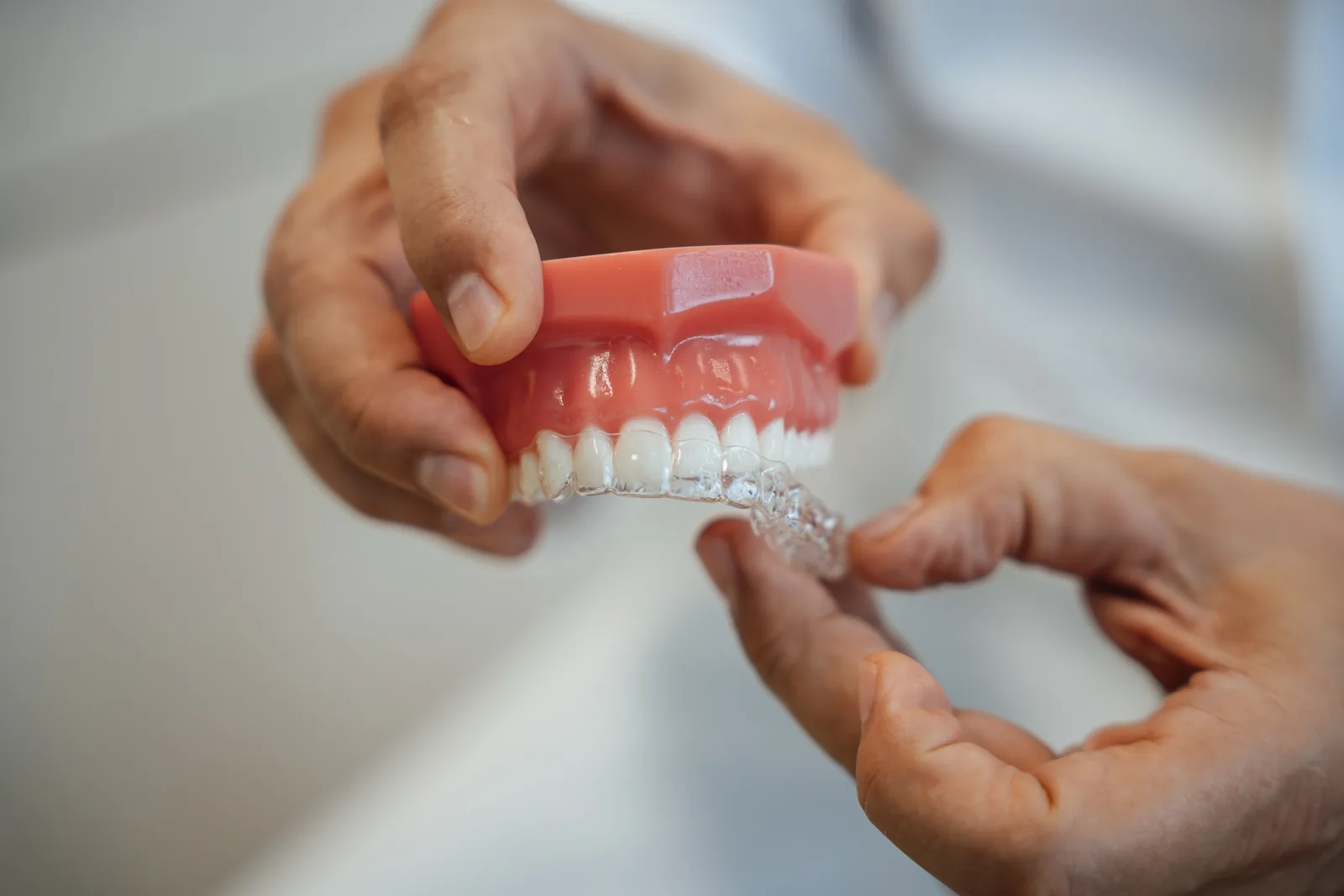
01
Clear and removable for cleaning
02
Digitally planned and supervised by a dentist
03
Includes regular check-ups and retention planning
01
Comprehensive assessment of tooth alignment, bite, and supporting structures
We examine the teeth, gums, and supporting structures before initiating any tooth movement. The treatment plan is also influenced by factors such as your bite, function, existing crowns or implants, and the amount of space available for the desired correction.
Aligners are suitable for specific types of misalignment. For more complex tooth or jaw misalignments, a different orthodontic approach or interdisciplinary treatment may be more appropriate.
02
Digital planning – clear visualization, not blanket promises
Depending on the clinical findings, the planning process incorporates a clinical examination, photos, a digital scan, a functional assessment, and necessary X-rays. A three-dimensional model can clearly illustrate the planned tooth movements and treatment phases.
The digital visualization serves as a planning aid and does not guarantee an exact match with the final result. Tissues react individually; therefore, the actual progress is monitored regularly and adjusted as needed.
03
Treatment requires consistent cooperation
Spark recommends wearing the aligners for 22 hours a day, including at night. They should be removed for eating, drinking, and cleaning your teeth and the aligners. The specific wear time and replacement schedule for your treatment will be determined in consultation with you.
The appropriate replacement schedule and the need for additional aids depend on the system used and the progress of your treatment. Therefore, we do not promise a fixed schedule prior to the examination.
04
In-person check-ups are part of aligner therapy
Tooth movements affect the teeth and the supporting structures (periodontium). Regular dental check-ups therefore monitor the fit, oral health, and treatment progress. Purely remote treatment without appropriate diagnostics and progress monitoring does not align with our treatment approach.
If aligners cannot be inserted as intended, if discomfort arises, or if progress deviates from the plan, this should be examined promptly.
05
Stabilization follows active correction
Teeth can shift back toward their original positions following orthodontic treatment. Consequently, a personalized retention plan—using removable or fixed retainers—is an integral part of the overall treatment.
Check-ups remain important during this phase as well, ensuring that any changes or damage to the retainers are detected early.
06
Spark Aligners: Understanding the process, costs, and alternatives beforehand
The scope and duration of treatment depend on the initial clinical findings, the treatment goal, biological response, and patient compliance. Following diagnostics and planning, we will explain the proposed steps, alternatives, and estimated costs before you make your decision.
As a general rule, statutory health insurance funds only cover orthodontic treatments started after the age of 18 in strictly limited, exceptional cases involving severe jaw anomalies. We will clarify the specific details of your insurance coverage and costs on an individual basis.
With aligner treatment, you are paying for more than just the plastic trays. The overall treatment plan includes diagnostics, tooth movement planning, custom-made aligners, personal progress checks, and stabilization of the result. The extent of the individual steps depends on your tooth alignment and the treatment goal.
Before starting, you should know: What services are included? How are additional trays billed if the treatment course needs adjustment? What happens if a tray is lost, and what retainers and follow-up checks are planned after active treatment? Asking these questions helps you make meaningful comparisons between offers. An advertised price for the trays alone does not necessarily reflect the entire treatment.
Product-specific information on planning and retention: Ormco: FAQs about Spark.
Frequently asked questions
Make an informed decision.
Which types of misalignment can be treated with aligners?
Aligners can be suitable for specific tooth movements. Whether this is medically appropriate for the alignment of your teeth and jaws can only be determined after an examination and treatment planning.
Are aligners truly invisible?
The aligners are transparent and generally much less noticeable than fixed braces. However, they are not completely invisible. Depending on the treatment plan, small tooth-colored attachments may be required on the teeth. These so-called “attachments” provide extra grip for the aligners during certain tooth movements.
Can I eat and drink while wearing aligners?
You should remove the aligners when eating or drinking. Clean your teeth before putting them back in. The aligners should be cleaned according to the agreed care instructions; adhering to the daily wear time remains important.
How long does aligner treatment take?
This depends on the type and extent of the tooth movements, the biological response, and patient compliance. A reliable treatment timeline can only be established after the diagnostic phase.
What happens after the final aligner?
The active tooth movement phase is followed by a retention phase. Removable or fixed retainers stabilize the achieved tooth position; the type, duration, and follow-up checks are planned individually.
Do statutory health insurance plans cover the costs for adults?
Generally, no. For orthodontic treatments started after the age of 18, costs are generally covered only in strictly limited, exceptional cases involving severe jaw anomalies. We will discuss the projected costs with you before you make a decision.
What should I do if I lose an aligner tray?
Please contact the practice. We will discuss how to proceed with the treatment. You should consult us before continuing to wear a previous tray or switching to the next one.
This information does not replace a personal examination or individual medical advice.
Responsible for clinical content: Dr. Stefan Schmid, dentist.
Additional areas of focus
Considering the bigger picture.
Veneers
Considering aesthetic goals, function, and tooth structure together to create a clear treatment plan.
Holistic approach
Viewing teeth, function, health, and your personal situation as a unified whole.
Dental implants
Providing individualized diagnosis and planning for implant-supported restorations within the overall treatment concept.