
Crowns, bridges, and dental prosthetics in Essen
Dental prosthetics should suit your initial dental situation, your bite, and your daily life. We compare fixed, implant-supported, and removable solutions, incorporating function, aesthetics, materials, cleaning options, and expandability into the planning process.
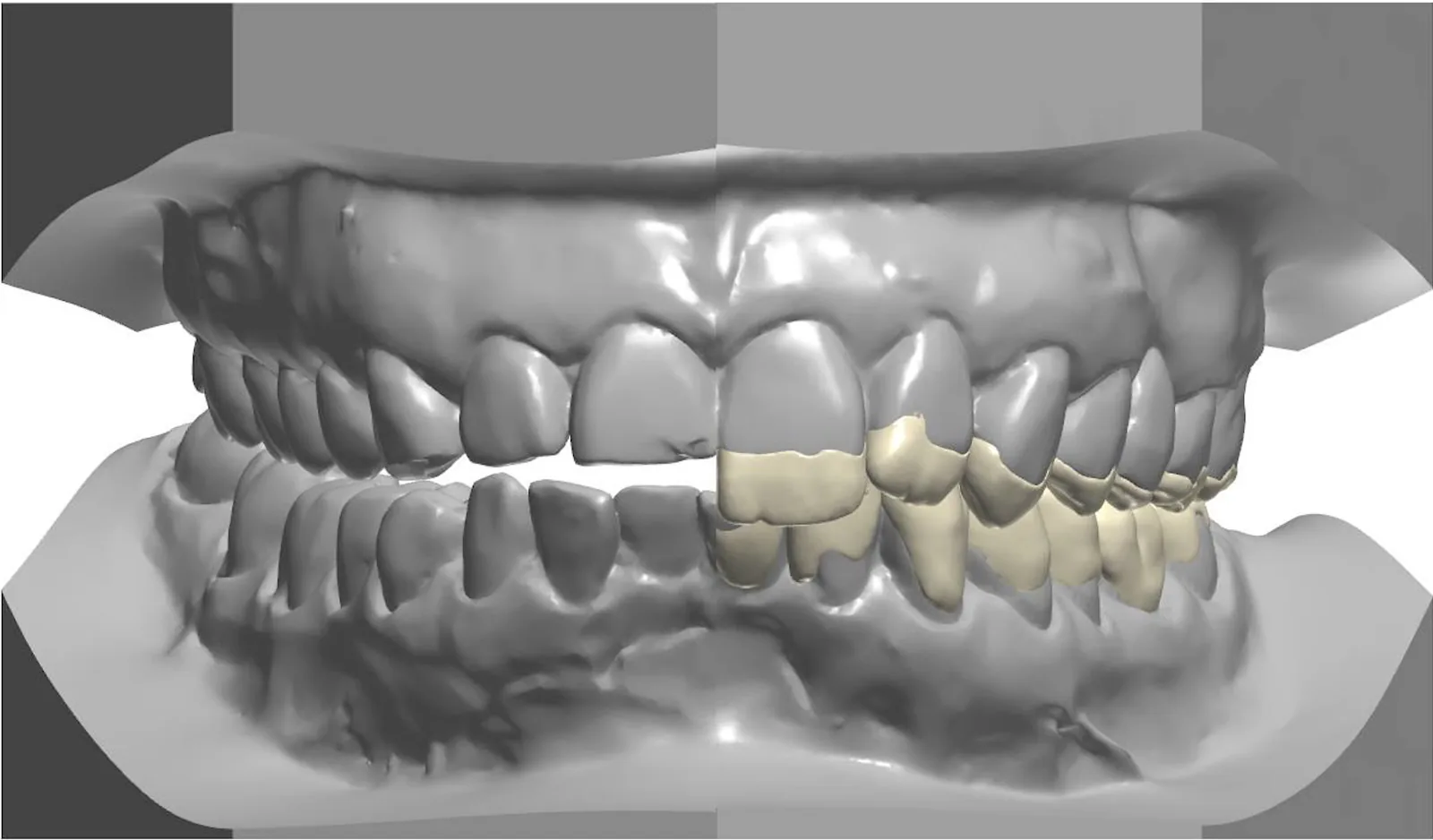
What types of dental prosthetics are available?
- Inlays and partial crowns: possible indirect restorations for larger defects.
- Crowns: encase a heavily damaged tooth and restore its shape and function.
- Bridges: can close a gap using adjacent teeth or implants.
- Implant-supported prosthetics: can support individual crowns, bridges, or more extensive restorations.
- Removable prosthetics: can be planned as conventional, combined, or implant-supported solutions, depending on the remaining teeth.
Information on planning an implant-supported restoration can be found under Dental Implants. We present the SDS ceramic implants—which we primarily use—in a separate section.
Material and design are determined by clinical findings
Ceramics, resins, and metals have different properties. The most suitable combination depends on factors such as position, load, available space, opposing teeth, aesthetic expectations, repairability, and individual medical history.
Terms like “metal-free,” “biological,” or “biocompatible” are not blanket guarantees of quality. We explain specific material properties and known limitations relevant to your situation.
Metal-free crowns: All-ceramic restorations matched to your tooth
A metal-free crown is made of dental ceramic and does not require a metal framework. This distinguishes it from a metal-ceramic crown, in which the visible ceramic covers a metal base. For a natural appearance, factors such as shape, translucency, and the transition to the gum line are just as important as tooth color.
We discuss which restoration suits the damaged tooth and your bite. We consider the remaining tooth structure, chewing forces, your material preferences and the clinical findings. ‘Metal-free’ describes the choice of material, but does not guarantee freedom from symptoms or unlimited durability. Please tell us about any known intolerances.
Depending on the clinical findings, we can fabricate ceramic restorations using CEREC directly at diadentis. However, not every tooth requires a full crown; whenever possible, we also consider tooth-preserving alternatives such as a partial crown or a metal-free filling. We will explain the scope of treatment and the associated costs before you make a decision.
Further general information: National Association of Statutory Health Insurance Dentists: Dental Prostheses.
Digital planning facilitates coordination.
Digital scans and planning data can facilitate communication between the dental practice and the dental laboratory. Whether a restoration is fabricated directly or in multiple treatment steps depends on the scope, the material, and the clinical situation.
CEREC: Ceramic restorations in a single visit
If the clinical findings are suitable, we can fabricate ceramic inlays, partial crowns, or crowns using CEREC directly in our practice in Essen-Bergerhausen and place them in a single visit. We will determine whether this approach is suitable for you following an examination and treatment planning.
A single-visit restoration is therefore a possible treatment option, not a guarantee for every case. More extensive restorations or necessary preparatory treatments may require additional appointments.
Comparing tooth replacements: Procedure, costs, and out-of-pocket expenses
Before making a decision, we compare more than just aesthetics: How much natural tooth structure is preserved? How easy is the restoration to clean? What kind of load will it be subjected to, and can it be repaired or extended later? Depending on the initial situation, a crown, bridge, implant-supported restoration, or removable solution may offer different advantages and disadvantages.
Following the examination and planning, preliminary treatment of the teeth and gums may be required. This is followed—depending on the chosen restoration—by preparation, scanning or impression-taking, fabrication, verification, and final placement. Temporary restorations and follow-up appointments may also be part of the process. We will explain the specific steps and appointments required for your case based on your clinical findings.
The costs include dental services, materials, and the fabrication of the dental prosthesis; any necessary preliminary treatments are also factored in. Patients with statutory health insurance generally receive a fixed subsidy based on the clinical findings for dental prostheses. This subsidy is not equivalent to a fixed percentage of the cost of any treatment option chosen. Bonus schemes and hardship provisions can affect the subsidy amount. The treatment and cost plan establishes the basis—prior to the start of treatment—for clarifying the planned restoration, the subsidy, and your estimated out-of-pocket expenses.
Further information from the KZBV: Treatment and Cost Plan and Fixed Subsidy and Out-of-Pocket Costs.
Care and check-ups ensure a solid foundation
Even high-quality dental prostheses require careful cleaning at home and regular check-ups. We will show you suitable cleaning aids and tailor the follow-up schedule to your teeth, gums, implants, and the specific restoration.
Frequently asked questions about dental prostheses.
Which solution is best for me?
This can only be answered reliably after an examination and evaluation of the clinical findings. There are often several suitable options, differing in terms of effort, maintenance requirements, functionality, and cost.
How long do dental prostheses last?
Durability depends on factors including the initial condition, material, design, loading, care and check-ups. No fixed lifespan can be promised for every case.
Responsible for clinical content: Dr. Stefan Schmid, dentist.